
Taxpoint

Author name: admin

Uncategorized

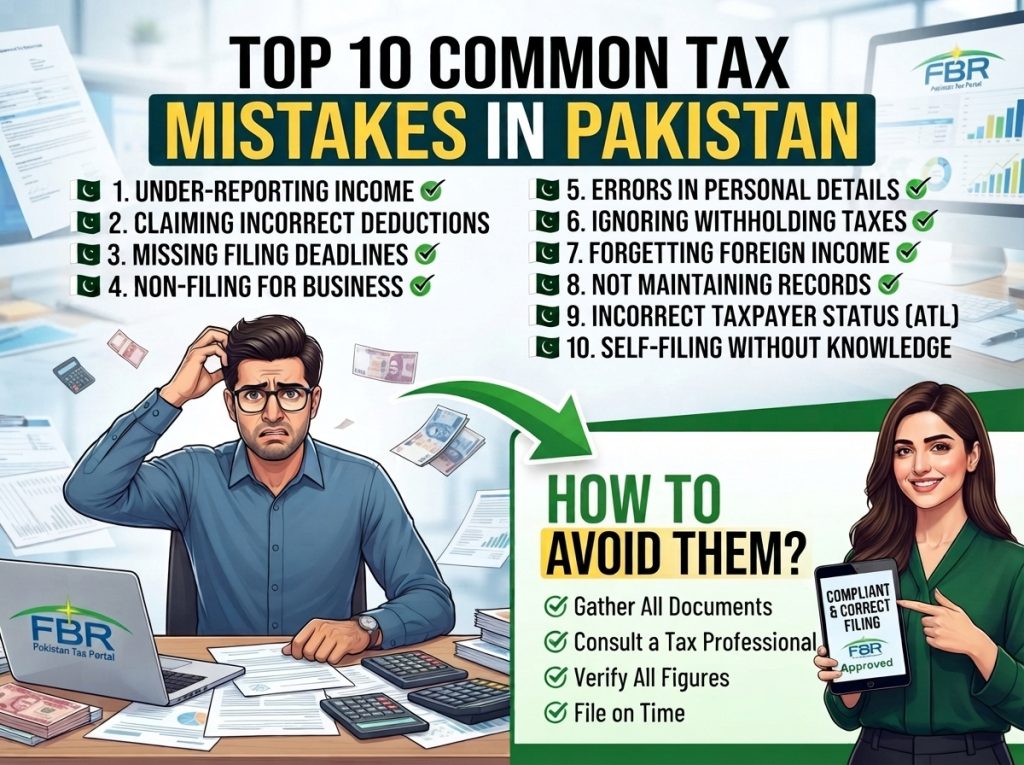
Top 10 Common Tax Filing Mistakes in Pakistan and How to Avoid Them

Filing your income tax return is an important responsibility for individuals and businesses in Pakistan. While the process has become more accessible through the Federal Board of Revenue (FBR), many taxpayers still make mistakes that can lead to penalties, delayed processing, higher withholding taxes, or notices from the tax authorities. Whether you’re a salaried employee, freelancer, business owner, consultant, or investor, understanding these common tax filing mistakes can help you submit an accurate return and remain fully compliant with FBR regulations. In this guide, we’ll discuss the top 10 tax filing mistakes in Pakistan and explain how you can avoid them. Why Accurate Tax Filing Matters Submitting an accurate tax return offers several benefits: Taking the time to review your return carefully can save you both time and money. 1. Missing the Tax Filing Deadline One of the most common mistakes taxpayers make is waiting until the last minute to file their income tax returns. Late filing can result in: How to Avoid It 2. Providing Incorrect Personal Information Simple errors such as incorrect CNIC numbers, email addresses, mobile numbers, or bank account details can create unnecessary problems during the filing process. Common Errors How to Avoid It Double-check all personal information before submitting your return. 3. Not Declaring All Sources of Income Many taxpayers only report their primary salary while forgetting other income sources. Income may include: Incomplete reporting can lead to discrepancies and possible FBR inquiries. How to Avoid It Prepare a complete list of all income sources before filing your return. 4. Ignoring Tax Credits and Deductions Some taxpayers miss eligible tax credits or deductions simply because they are unaware of them. This may result in paying more tax than necessary. How to Avoid It Review available tax credits under applicable tax laws and maintain proper supporting documentation. If you’re unsure, seek professional advice before submitting your return. 5. Incorrect Wealth Statement The Wealth Statement is a critical part of many tax returns. Common mistakes include: An inaccurate Wealth Statement can trigger notices or requests for clarification. How to Avoid It Maintain updated records of your assets, liabilities, investments, and financial transactions throughout the year. 6. Poor Record Keeping Many taxpayers struggle because they do not maintain proper financial records. Missing documents may include: How to Avoid It Create a dedicated folder (physical or digital) for all tax-related documents and update it regularly. 7. Filing Without Reviewing the Return Submitting a tax return without reviewing it is another common mistake. Small errors can affect the accuracy of your filing. Review Before Submission Check: A final review can prevent unnecessary corrections later. 8. Not Keeping Proof of Filing Some taxpayers submit their returns but fail to save or print the acknowledgment and supporting records. These documents may be required later for: How to Avoid It Keep digital and printed copies of: Store them safely for future reference. 9. Trying to Handle Complex Tax Matters Without Professional Help If you have multiple income sources or complex financial affairs, preparing your tax return without professional guidance can increase the risk of mistakes. Examples include: How to Avoid It Consult experienced tax professionals who understand FBR regulations and can prepare your return accurately. 10. Ignoring FBR Notices or Tax Updates Some taxpayers overlook important notifications or fail to respond to official FBR communications within the required timeframe. Ignoring these notices can lead to additional compliance issues. How to Avoid It Bonus Tips for Error-Free Tax Filing Follow these best practices every tax season: Why Professional Tax Filing Is Worth It Professional tax consultants can help you: Expert guidance can provide confidence and peace of mind throughout the filing process. Why Choose TaxPoint.pk? TaxPoint.pk is committed to making tax compliance simple, secure, and stress-free for individuals and businesses across Pakistan. Our services include: Our experienced consultants ensure your tax return is prepared accurately and submitted in accordance with FBR requirements. Frequently Asked Questions (FAQs) What is the most common tax filing mistake? The most common mistake is waiting until the deadline to file, which increases the likelihood of errors and missed information. Can mistakes in a tax return cause FBR notices? Yes. Incorrect or incomplete information may result in FBR requesting clarification or additional documentation, depending on the circumstances. Why is the Wealth Statement important? The Wealth Statement provides information about your assets, liabilities, and financial position. Accuracy and completeness are essential where it is required under applicable tax laws. Should freelancers file tax returns? Freelancers who are required to file under applicable tax laws should submit accurate income tax returns and declare their income accordingly. Can TaxPoint.pk help me avoid filing mistakes? Yes. TaxPoint.pk’s experienced tax consultants assist individuals and businesses with accurate tax preparation, documentation, and FBR-compliant filing to minimize common errors.

Uncategorized

How to Become an Active Taxpayer in Pakistan: Benefits, Process & Requirements

A Complete Guide to Becoming an Active Taxpayer (ATL) in Pakistan Becoming an Active Taxpayer in Pakistan is one of the smartest financial decisions you can make. Whether you’re a salaried employee, freelancer, business owner, investor, or entrepreneur, joining the Active Taxpayer List (ATL) can help you save money through lower withholding taxes while staying compliant with Federal Board of Revenue (FBR) regulations. The ATL is maintained by FBR and is updated regularly for eligible taxpayers who file their income tax returns. In this guide, you’ll learn everything you need to know about becoming an Active Taxpayer, including eligibility, benefits, the filing process, required documents, and common mistakes to avoid. What Is an Active Taxpayer? An Active Taxpayer is an individual, Association of Persons (AOP), or company whose name appears on the Active Taxpayer List (ATL) maintained by the Federal Board of Revenue (FBR). The ATL contains taxpayers who have submitted their income tax returns in accordance with FBR requirements. Being listed on the ATL allows taxpayers to benefit from reduced withholding tax rates on many financial transactions. What Is the Active Taxpayer List (ATL)? The Active Taxpayer List (ATL) is an official record published by FBR that identifies taxpayers who have filed their income tax returns for the relevant tax year. Banks, property registrars, vehicle registration authorities, and other organizations use the ATL to determine whether an individual or business qualifies for lower withholding tax rates. FBR also provides online verification, SMS verification, and downloadable ATL records. Who Can Become an Active Taxpayer? You may qualify for ATL status if you are: Benefits of Becoming an Active Taxpayer Lower Withholding Tax One of the biggest advantages of becoming an Active Taxpayer is paying lower withholding tax on various financial transactions. This can include: These benefits can result in significant long-term tax savings. Save Money Every Year Non-active taxpayers generally pay higher tax rates on many transactions. Remaining on the ATL helps reduce unnecessary tax deductions throughout the year. Better Financial Credibility Banks and financial institutions often request tax returns when processing: Being an Active Taxpayer demonstrates financial responsibility. Easier Business Operations Businesses that remain tax compliant often experience smoother dealings with government departments, suppliers, and financial institutions. Peace of Mind Filing your taxes on time helps reduce the risk of notices, penalties, and compliance issues. Requirements to Become an Active Taxpayer Before filing your tax return, you should have: Step-by-Step Process to Become an Active Taxpayer Step 1: Gather Your Financial Documents Collect all relevant financial records, including salary details, business income, bank statements, investments, rental income, and tax deduction certificates. Step 2: Prepare Your Income Tax Return Calculate your annual income and prepare an accurate income tax return with all required information. Step 3: Review Your Information Double-check: Accuracy helps prevent delays and notices. Step 4: Submit Your Tax Return Submit your income tax return through the FBR system before the applicable deadline. After successful filing and meeting the applicable requirements, your status is reflected in the Active Taxpayer List according to FBR procedures. Step 5: Verify Your ATL Status You can verify your Active Taxpayer status through: Common Mistakes to Avoid Many taxpayers delay their inclusion in the ATL because of simple mistakes, such as: Careful preparation can help avoid these issues. How Long Does It Take to Become an Active Taxpayer? After your tax return is successfully filed and processed, your Active Taxpayer status is updated according to FBR procedures and ATL update schedules. FBR also updates the downloadable ATL regularly. Why Professional Tax Assistance Matters Tax laws can be complex, especially if you have: Professional tax consultants help ensure: Why Choose TaxPoint.pk? At TaxPoint.pk, we make tax compliance simple for individuals and businesses across Pakistan. Our professional services include: Our experienced consultants ensure that your tax return is prepared accurately, submitted on time, and fully compliant with FBR regulations. Frequently Asked Questions (FAQs) What is the Active Taxpayer List (ATL)? The ATL is the official list maintained by FBR that includes taxpayers who have filed their income tax returns for the relevant tax year. Can freelancers become Active Taxpayers? Yes. Freelancers who are required to file tax returns can become Active Taxpayers after meeting the applicable filing requirements. How can I check my ATL status? You can verify your status through the FBR online portal, by SMS (9966), or by downloading the latest ATL from the FBR website. Is filing a tax return enough to become an Active Taxpayer? Filing your tax return is the primary requirement, but your inclusion in the ATL is subject to FBR’s applicable rules and update process. Why should I choose TaxPoint.pk? TaxPoint.pk offers expert tax consultation, accurate tax preparation, secure document handling, and reliable assistance for individuals and businesses seeking hassle-free tax compliance.

Uncategorized

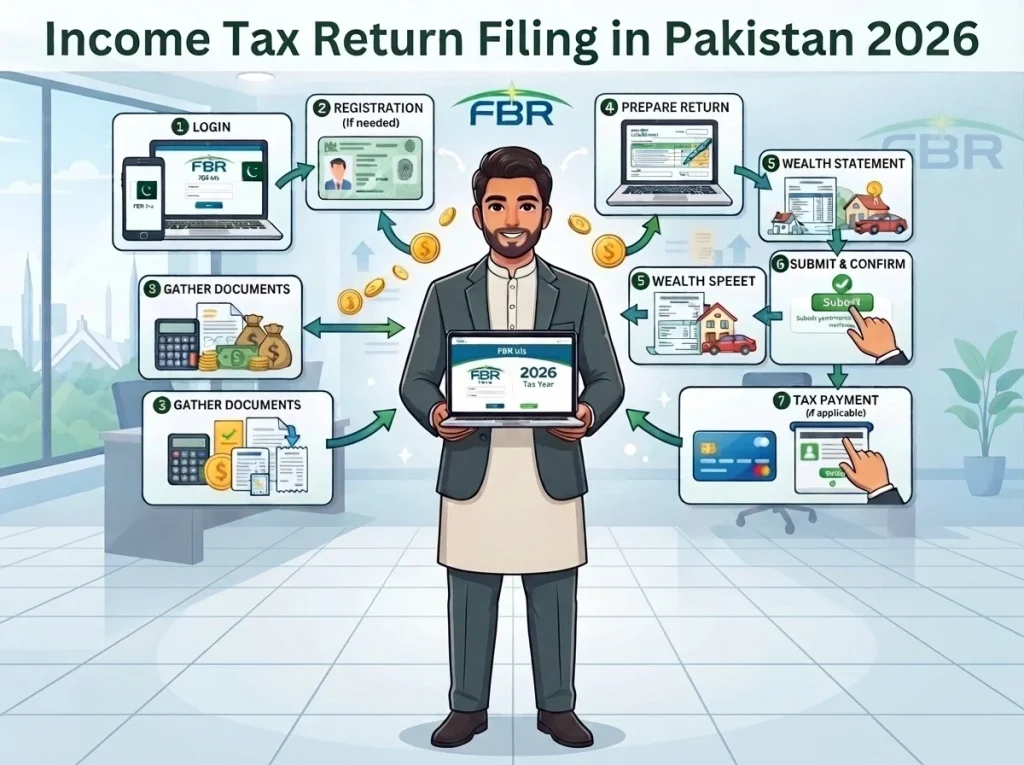
Income Tax Return Filing in Pakistan 2026: A Complete Step-by-Step Guide

Filing your income tax return is one of the most important responsibilities for every eligible taxpayer in Pakistan. Whether you are a salaried employee, freelancer, business owner, landlord, or investor, submitting your tax return on time helps you remain compliant with the Federal Board of Revenue (FBR), avoid penalties, and enjoy the benefits of being an Active Taxpayer. If you’re filing your tax return for the first time, this comprehensive guide will walk you through the complete process. What Is an Income Tax Return? An income tax return is an official declaration submitted to the Federal Board of Revenue (FBR) that reports your income, expenses, tax deductions, assets, liabilities, and taxes paid during a tax year. The information allows FBR to calculate your tax liability and determine whether you owe additional tax or qualify for adjustments according to Pakistan’s tax laws. Who Should File an Income Tax Return? You should consider filing a tax return if you fall into any of the following categories: Even if your tax liability is low, filing a return helps maintain legal compliance and may provide access to additional financial benefits. Benefits of Filing Your Tax Return Become an Active Taxpayer Submitting your return can qualify you for inclusion in the Active Taxpayer List (ATL), allowing you to enjoy lower withholding tax rates on many transactions. Avoid Penalties Late filing can result in penalties, additional taxes, and legal notices from FBR. Lower Withholding Taxes Active taxpayers generally pay reduced withholding taxes on: Easier Financial Approvals Many banks and financial institutions request tax returns when evaluating: Strong Financial Record Regular tax filing demonstrates financial responsibility and builds credibility with government departments and financial institutions. Documents Required Before Filing Keep the following documents ready: Having complete documentation makes the filing process faster and more accurate. Step-by-Step Income Tax Filing Process Step 1: Gather Your Financial Information Collect details of: Step 2: Calculate Your Income Determine your total annual income from all eligible sources. Include every taxable source to avoid discrepancies during verification. Step 3: Claim Eligible Deductions Depending on your circumstances, you may qualify for certain tax credits or deductions permitted under Pakistani tax laws. Proper documentation is essential when claiming deductions. Step 4: Prepare Your Tax Return Your tax return should accurately include: Accuracy is important because incorrect information may lead to notices or delays. Step 5: Review Before Submission Before submitting: Step 6: Submit to FBR Once everything has been reviewed and verified, submit your tax return through the FBR system. Keep a copy of your submission and acknowledgement for future reference. Common Mistakes to Avoid Many taxpayers make avoidable mistakes, including: Careful preparation can help you avoid unnecessary delays or FBR notices. What Happens If You Don’t File? Failure to file your tax return may result in: Timely filing helps you remain compliant and avoid these issues. Why Professional Tax Assistance Matters Tax regulations can change from year to year, and filing requirements may vary based on your income sources. Working with experienced tax consultants can help you: Professional guidance provides peace of mind and helps you avoid costly mistakes. Why Choose TaxPoint.pk? TaxPoint.pk offers reliable and professional tax services for individuals and businesses across Pakistan. Our services include: With experienced consultants and a secure process, TaxPoint.pk makes tax filing simple, accurate, and stress-free. Frequently Asked Questions (FAQs) Is filing an income tax return mandatory? Individuals who meet the filing criteria under FBR regulations are required to submit their tax returns within the prescribed deadlines. Can salaried employees file tax returns? Yes. Salaried individuals who meet the applicable requirements can file their income tax returns. What is the Active Taxpayer List (ATL)? The Active Taxpayer List is maintained by FBR and includes taxpayers who have filed their income tax returns. Being on the ATL generally allows taxpayers to benefit from lower withholding tax rates. Can freelancers file income tax returns? Yes. Freelancers earning taxable income should file their income tax returns and declare their income according to applicable tax regulations. Why should I use TaxPoint.pk? TaxPoint.pk provides expert guidance, accurate tax preparation, secure handling of your information, and assistance with FBR-compliant filing, making the process easier for individuals and businesses.

Scroll to Top